
How to Plan a One-Hour Home Tuition Session: A Step-by-Step Guide
Plan an effective one-hour home tuition session with clear objectives, time blocks, and engagement strategies. Maximize learning outcomes for your student.
| Topic | Teaching Jobs |
|---|---|
| Focus | home tuition |
| Read time | 5 min |
| Words | 959 |
| Published | 6 Oct 2026 |
| Best for | Tutors & teachers |
Quick Answer
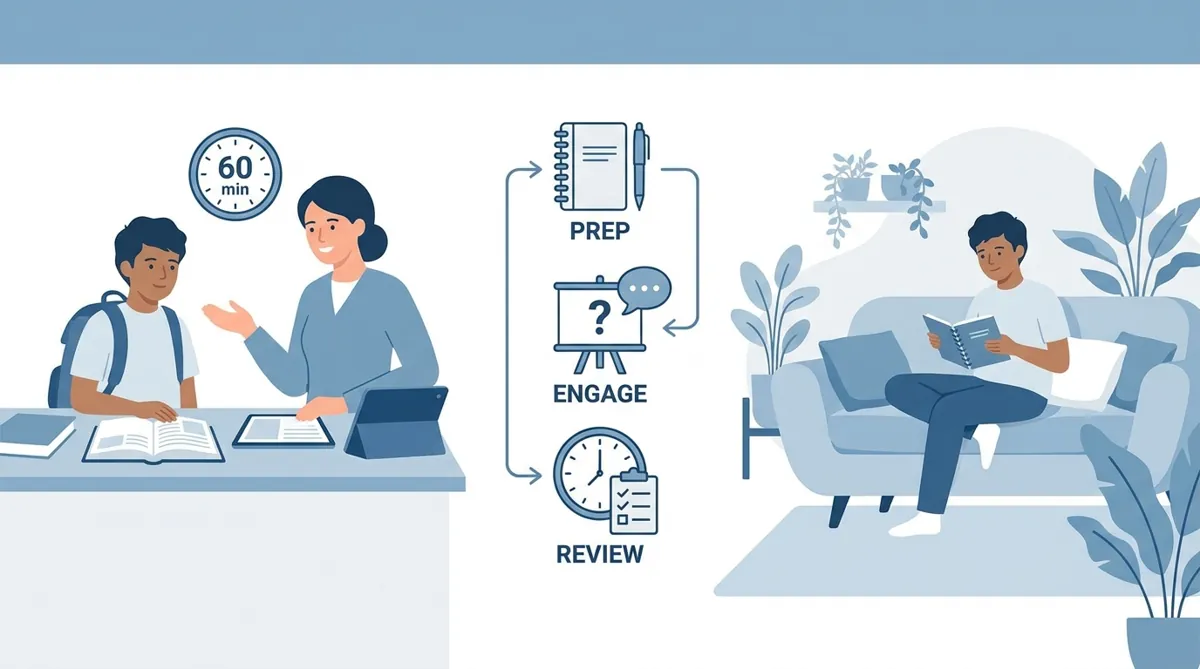
A well-planned one-hour home tuition session starts with clear learning objectives and a structured time breakdown. Divide your hour into concept introduction, practice, and review to keep students engaged and track progress effectively.
Why Planning Matters for Home Tuition
Home tuition is most effective when purposeful. One-on-one sessions allow you to tailor content to a student's pace—but only with a clear plan. A structured one-hour session prevents wasted time, keeps students focused, and ensures measurable progress. Whether tutoring in Delhi NCR, Noida, Gurugram, or online, planning transforms a casual study hour into a productive learning experience.
The Three-Block Structure for a One-Hour Session
Block 1: Introduction & Concept Building (10–15 minutes)
Start by reviewing what the student learned previously. Ask them to recall key points—this activates prior knowledge and identifies gaps. Introduce today's concept using simple language, real-world examples, or visual aids. For instance, if teaching fractions to a Class 5 student, use pizza slices or cake portions. Keep this phase interactive; avoid lecturing for the full 15 minutes.
Block 2: Practice & Problem-Solving (30–40 minutes)
This is the core of your session. Work through 2–3 solved examples together, then let the student attempt problems independently while you observe. Encourage them to explain their reasoning aloud—this reveals misunderstandings early. Provide hints rather than direct answers; let them struggle and discover solutions. This builds confidence and deeper understanding. If stuck, break problems into smaller steps.
Block 3: Review & Closure (5–10 minutes)
Summarize key takeaways in 2–3 sentences. Ask the student to explain one concept back to you—this confirms learning. Assign 2–3 homework problems related to today's topic, and note areas needing extra focus next session. End on a positive note to maintain motivation.
Pre-Session Preparation Checklist
Preparation is the backbone of effective teaching. Review your student's previous session notes and identify unresolved doubts. Check the curriculum or textbook to confirm today's topic aligns with their school syllabus. Gather all materials: textbooks, worksheets, a calculator, and reference notes. Prepare 2–3 practice problems of varying difficulty—easy ones to build confidence, moderate ones for skill-building, and challenging ones to stretch thinking. Set up your teaching space: good lighting, minimal distractions, and all materials within arm's reach. This groundwork ensures you're not fumbling for resources mid-session.
Time Management Tips
Set Clear Learning Objectives
Before the session, write down what the student should know or do by the end of the hour. Instead of "teach Chapter 3," aim for "student can solve linear equations with one variable." This clarity keeps you focused and helps you measure success.
Use a Timer
Gently use a timer or clock to stay on track. If concept introduction runs over, you'll know to speed up practice time. This isn't rigid—adjust if the student needs more time on a tricky concept—but awareness prevents sessions from drifting.
Prepare Backup Activities
If you finish early, have an extra worksheet or a different approach to the same topic ready. If a student is struggling, switch to a simpler explanation or visual method rather than repeating the same approach.
Engagement Strategies for One-Hour Sessions
Engagement is the difference between passive listening and active learning. Ask open-ended questions: "Why do you think this step comes next?" rather than "Is this right?" Use real-world connections—relate algebra to shopping bills, geometry to building design, or science to everyday phenomena. Vary your teaching method every 10–15 minutes: explain, then practice, then discuss, then problem-solve. Include a brief mental break if the student seems tired—a 1–2 minute stretch or quick non-academic chat helps reset focus. Celebrate small wins: "Great, you got that step right!" builds confidence and motivation.
Adapting Your Plan Based on Student Pace
For Faster Learners
If a student grasps concepts quickly, extend the practice block with harder problems, introduce related concepts, or ask them to explain the topic to you. This prevents boredom and deepens understanding.
For Learners Who Need More Time
Spend extra time in the introduction phase with more examples and analogies. Reduce the number of practice problems but ensure they're well-understood. Revisit the concept in the next session rather than rushing through.
Documentation and Follow-Up
After each session, jot down what was covered, what the student understood well, and what needs reinforcement. Note homework assigned and any behavioral or learning observations. This record helps you plan the next session and gives parents visibility into progress. If you're offering both online and home tuition in Delhi NCR, consistent documentation ensures continuity regardless of format.
Common Mistakes to Avoid
Overloading the Session
Trying to cover too many topics dilutes focus. Stick to one main concept per session; depth beats breadth.
Skipping the Review Phase
Ending abruptly without summary or homework leaves students uncertain about what they learned. Always close with clarity.
Ignoring Student Feedback
If a student says "I don't understand," pause and try a different explanation. Pushing forward creates frustration and gaps in learning.
Tailoring Sessions for Different Subjects
A one-hour Math session might emphasize problem-solving practice, while an English session might balance grammar explanation with reading comprehension and writing exercises. Science sessions benefit from visual demonstrations or thought experiments. Choosing the right tuition approach for your child's needs means adapting your structure to the subject and student learning style. Regardless of whether you're teaching in Noida, Gurugram, or online, the core principle remains: structure + flexibility = effective learning.
Final Thoughts
Planning a one-hour home tuition session isn't about rigid scripts—it's about intentional design. A clear structure with introduction, practice, and review ensures every minute counts. Preparation, time awareness, and engagement strategies transform a study hour into a focused, productive learning experience. Start with this framework, observe what works for your student, and refine your approach over time. Consistent, well-planned sessions build momentum, boost confidence, and deliver real academic progress.
Related articles
- How to Give Effective Feedback to Students: A Guide for Tutors
- Benefits of One-on-One Home Tuition for Weak Students
- Online Tuition vs Offline Tuition: Pros and Cons for CBSE Students
- How to Become a Successful Home Tutor in India: A Complete Guide
- Find Students for Tuition Near Me: A Guide for Tutors in India
Explore related tuition services: online tuition · CBSE tuition · home tuition