
How to Understand the Water Cycle for Class 5 Science
Learn the water cycle for Class 5 CBSE science: evaporation, condensation, precipitation & collection explained simply with real examples.
| Topic | Exam Prep |
|---|---|
| Focus | Class 5 Science |
| Read time | 5 min |
| Words | 988 |
| Published | 13 Sep 2026 |
| Best for | Parents & students |
What Is the Water Cycle?
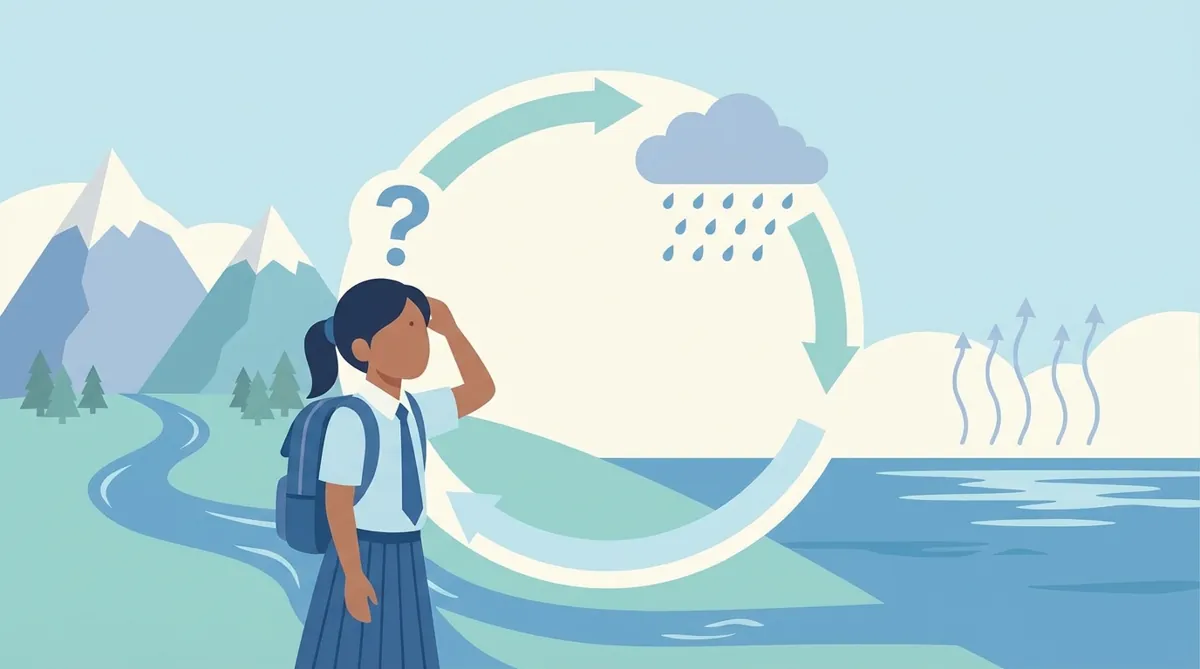
The water cycle is the continuous movement of water between Earth's surface and the atmosphere. It consists of four main stages: evaporation, condensation, precipitation, and collection. Understanding how water moves through these stages helps Class 5 students see how nature recycles water and why this process is essential for all life on Earth.
The Four Stages of the Water Cycle Explained
Stage 1: Evaporation
Evaporation is where water turns into water vapor. Heat from the sun warms water in oceans, rivers, lakes, and soil, causing water molecules to move faster and escape into the air as invisible water vapor. You can observe evaporation when wet clothes dry on a clothesline or puddles disappear after rain. The warmer the sun, the faster evaporation occurs.
Stage 2: Condensation
As water vapor rises into the atmosphere, it cools down and changes back into liquid water droplets. These tiny droplets gather to form clouds. You can observe condensation at home when steam from hot water cools on a mirror or window and forms droplets, happening on a much larger scale in the sky.
Stage 3: Precipitation
When water droplets in clouds become heavy enough, they fall back to Earth as precipitation. Precipitation can take different forms depending on temperature: rain, snow, sleet, or hail. In India, most precipitation occurs during the monsoon season when clouds release enormous amounts of water. This stage is crucial because it brings fresh water to land, filling rivers, lakes, and soil with water that plants and animals need.
Stage 4: Collection
After precipitation falls, water collects in various places. Some flows into rivers and streams, eventually reaching oceans and lakes. Some soaks into the ground and becomes groundwater, which plants use through their roots. Some is absorbed by soil and later evaporates again, completing the cycle.
Why Is the Water Cycle Important?
The water cycle is important because it distributes fresh water across the planet, ensuring water reaches areas far from oceans. It regulates Earth's temperature by moving heat energy through evaporation and condensation. It provides water for plants to grow, animals to drink, and humans to use. Without the water cycle, life on Earth would not be possible.
Real-Life Examples of the Water Cycle
Example 1: A Puddle After Rain
After rain in Delhi or Noida, puddles form on the ground. Over the next few hours, these puddles disappear even without additional rain. The sun's heat causes evaporation, turning the water into vapor that rises into the air and eventually forms new clouds.
Example 2: Monsoon Rains in India
During India's monsoon season, massive amounts of water evaporate from the Indian Ocean. This water vapor rises and condenses into huge clouds that travel inland. When these clouds reach areas like Delhi NCR, Gurugram, and Noida, they release heavy precipitation, filling rivers and reservoirs.
Example 3: Morning Dew on Grass
Early in the morning, tiny water droplets appear on grass and leaves through condensation. During the night, the air cools, causing water vapor near the ground to condense into liquid water droplets—the water cycle happening in your garden.
Common Questions About the Water Cycle
What are the four main stages of the water cycle?
The four main stages are evaporation (water turns to vapor from heat), condensation (vapor cools and forms clouds), precipitation (water falls as rain or snow), and collection (water gathers in oceans, rivers, and lakes). Each stage is connected, creating a continuous cycle that has been repeating for billions of years.
Why is the water cycle important for life on Earth?
The water cycle distributes fresh water across the planet, refills rivers and groundwater, regulates temperature, and ensures plants and animals have access to water for survival and growth. Without this cycle, water would remain trapped in oceans and unavailable to most living things.
What causes evaporation in the water cycle?
Heat from the sun causes water in oceans, rivers, lakes, and soil to turn into water vapor and rise into the atmosphere. The more intense the sun's heat, the faster evaporation happens.
Tips for Class 5 Students to Remember the Water Cycle
Use a Simple Diagram
Draw or study a water cycle diagram showing the sun, ocean, clouds, rain, and rivers. Visual learning helps you remember the stages better. Label each stage clearly and trace the path water takes with your finger.
Create a Water Cycle Model
Make a simple water cycle model at home using a plastic bag, soil, water, and tape. Place wet soil in a bag, seal it, and leave it in sunlight. You'll see water droplets form on the inside of the bag, demonstrating condensation and evaporation.
Observe Nature Around You
Watch puddles disappear, notice clouds forming, and observe morning dew. Connecting the water cycle to real-life observations makes it easier to understand and remember.
How EZ Tuitions Can Help You Master the Water Cycle
If you're struggling to understand the water cycle or other Class 5 science concepts, personalized science tuition can make a real difference. At EZ Tuitions, our experienced tutors in Delhi NCR, Noida, Gurugram, and online explain complex topics using simple language, diagrams, and real-world examples. We offer both home tuition and online classes tailored to your learning pace.
Whether you need help with the water cycle, photosynthesis, or other science topics, our tutors break down difficult concepts into easy-to-understand parts. Regular practice and guided learning ensure you understand the water cycle and score well in your exams.
Key Takeaways
The water cycle consists of four stages: evaporation, condensation, precipitation, and collection. Heat from the sun drives the cycle by causing water to evaporate from oceans, rivers, and lakes. This water vapor rises, cools, and condenses into clouds. When clouds become heavy, water falls as precipitation, completing the cycle. Understanding the water cycle helps you appreciate how nature recycles water and sustains life on Earth. With regular practice and clear explanations, mastering this concept becomes simple and enjoyable.
Frequently asked questions
- What Is the Water Cycle?
- The water cycle is the continuous movement of water between Earth's surface and the atmosphere. It consists of four main stages: evaporation, condensation, precipitation, and collection.
- Why Is the Water Cycle Important?
- The water cycle is important because it distributes fresh water across the planet, ensuring water reaches areas far from oceans. It regulates Earth's temperature by moving heat energy through evaporation and condensation. It provides water for plants to grow, animals to drink, and humans to use.
- What are the four main stages of the water cycle?
- The four main stages are evaporation (water turns to vapor from heat), condensation (vapor cools and forms clouds), precipitation (water falls as rain or snow), and collection (water gathers in oceans, rivers, and lakes).
- Why is the water cycle important for life on Earth?
- The water cycle distributes fresh water across the planet, refills rivers and groundwater, regulates temperature, and ensures plants and animals have access to water for survival and growth. Without this cycle, water would remain trapped in oceans and unavailable to most living things.
- What causes evaporation in the water cycle?
- Heat from the sun causes water in oceans, rivers, lakes, and soil to turn into water vapor and rise into the atmosphere. The more intense the sun's heat, the faster evaporation happens.
- How EZ Tuitions Can Help You Master the Water Cycle?
- If you're struggling to understand the water cycle or other Class 5 science concepts, personalized science tuition can make a real difference . At EZ Tuitions, our experienced tutors in Delhi NCR, Noida, Gurugram, and online explain complex topics using simple language, diagrams, and real-world…
Related articles
- How to Master Fractions for Class 6 Maths: A Complete Guide
- How to Improve Reading Comprehension in English for Students
- How to Understand Photosynthesis Easily for Class 7
- How to Solve Quadratic Equations Step by Step for Class 10
- How to Improve English Grammar for School Students: Practical Tips & Strategies
Explore related tuition services: CBSE tuition · home tuition