
How Much Screen Time Is Healthy for School Students? A Parent's Guide
Experts recommend 1-2 hours daily for school students. Learn safe limits, eye care tips, and balance study with offline learning at EZ Tuitions.
| Topic | Parenting |
|---|---|
| Focus | screen-time |
| Read time | 4 min |
| Words | 851 |
| Published | 13 Sep 2026 |
| Best for | Parents & students |
The Quick Answer: 1–2 Hours Daily Is the Healthy Limit
Most pediatricians and education experts recommend that school students limit screen time to 1–2 hours per day for academic and productive purposes. Beyond this, excessive screen exposure can harm concentration, sleep quality, posture, and eye health. However, the quality of that time matters more than the quantity—purposeful learning beats passive scrolling.
Why Screen Time Matters for Student Health
Screen time isn't inherently bad. Online classes, educational videos, and digital homework tools are now essential parts of modern learning, especially in Delhi NCR schools following the CBSE curriculum. The problem arises when students spend too many hours staring at devices without breaks, proper posture, or clear boundaries.
Excessive screen exposure can lead to digital eye strain, poor sleep, reduced physical activity, and difficulty concentrating—all of which directly impact academic performance. Students who spend 4+ hours daily on screens often report headaches, blurred vision, and trouble retaining information.
What Does Healthy Screen Time Look Like?
Educational Screen Time (1–2 hours)
This includes online classes, CBSE study materials, educational apps, and homework on laptops or tablets. This is purposeful, structured time that supports learning. When your child is taking an online tuition class, they're engaging with content actively, asking questions, and building skills.
Recreational Screen Time (Separate Limit)
Social media, gaming, and entertainment should be kept to 30–45 minutes on school days, ideally after homework and study time are complete. Many parents find it helpful to set a "no screens after 8 PM" rule to protect sleep.
Screen-Free Time (Essential)
Students need at least 1–2 hours daily without any screens. This includes meals, outdoor play, reading physical books, and face-to-face interaction. This time is crucial for mental health, physical development, and genuine rest.
How Excessive Screen Time Affects Academic Performance
Research and teacher feedback consistently show that students exceeding 3–4 hours of daily screen time struggle with:
- Reduced concentration: Constant notifications and task-switching train the brain to lose focus quickly.
- Sleep disruption: Blue light from screens suppresses melatonin, making it harder to fall asleep. Poor sleep directly reduces memory and learning ability.
- Eye strain and headaches: Extended screen time without breaks causes digital eye fatigue, leading to discomfort and reduced study efficiency.
- Poor posture: Hunching over devices can cause neck and back pain, making long study sessions uncomfortable.
- Reduced retention: Passive screen consumption (scrolling, watching without note-taking) doesn't create strong memory pathways like active learning does.
Practical Tips to Manage Screen Time Effectively
The 20-20-20 Rule
Every 20 minutes of screen time, take a 20-second break and look at something 20 feet away. This simple habit prevents eye strain and gives your brain a micro-rest, improving focus for the next study block.
Set Device-Free Zones and Times
No screens during meals, the first hour after waking, or the last hour before bed. These boundaries protect sleep and create space for real family interaction. Many Noida and Gurugram parents find that offline home tuition sessions naturally create these screen-free moments.
Use Parental Controls and App Timers
Most devices have built-in tools to limit app usage and set downtime schedules. Use them. When limits are enforced automatically, there's less negotiation and fewer temptations.
Combine Online and Offline Learning
Balance online classes and study apps with offline tuition, library time, and group study sessions. This mix keeps learning fresh, reduces screen fatigue, and often improves grades. Many students in Delhi and Noida benefit from blended learning approaches—some subjects online, others with a home tutor.
Model Healthy Habits
Children mirror their parents' behavior. If you're constantly on your phone, they will be too. Show them what healthy screen time looks like by managing your own device use.
What Is the Recommended Daily Screen Time for School Students?
Health experts and pediatricians recommend 1–2 hours of purposeful screen time daily for school-age children. This includes online classes, homework, and educational content—not social media or entertainment. Beyond this window, the risk of attention problems, sleep issues, and eye strain increases significantly.
How Does Excessive Screen Time Affect Student Academic Performance?
Too much screen time reduces concentration, disrupts sleep cycles, and increases eye strain, all of which directly harm grades and learning retention. Students who exceed 3–4 hours daily often show declining focus and memory. Teachers in CBSE schools frequently notice that students with high screen time struggle with attention in class and perform worse on exams.
Can Offline Tuition Help Reduce Harmful Screen Time for Students?
Yes. In-person tuition at learning centers or home tuition provides face-to-face interaction, better focus control, and breaks from screens—complementing online learning and creating a balanced study routine. For students in Delhi NCR, combining offline home tuition with selective online resources often produces the best results.
The Bottom Line
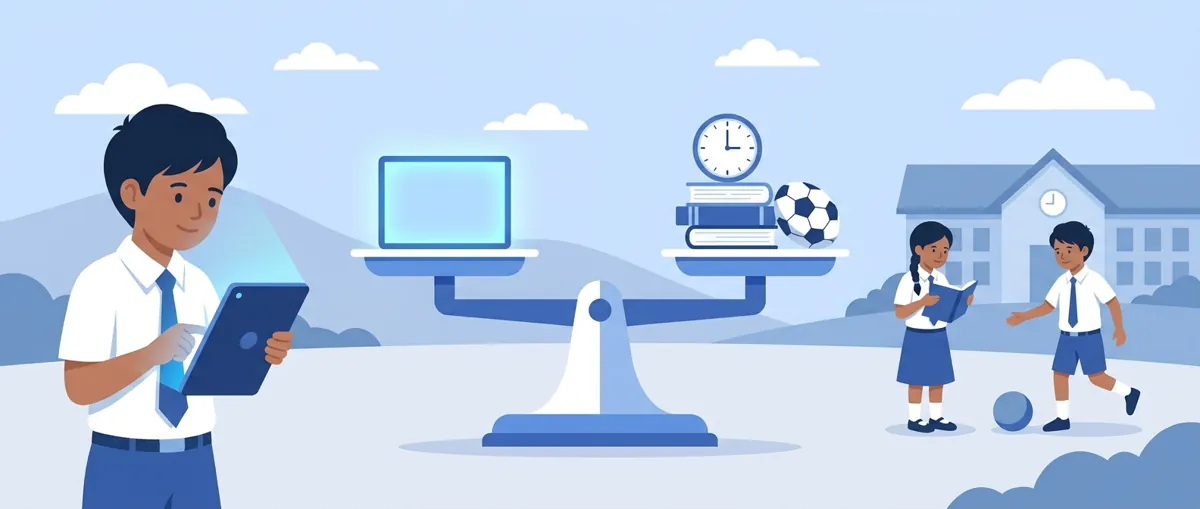
Healthy screen time for school students is about quality, boundaries, and balance. Aim for 1–2 hours of purposeful educational screen time daily, protect sleep by avoiding screens before bed, take regular breaks, and ensure plenty of offline learning and play. By mixing online tuition, offline study, and screen-free time, you'll help your child develop strong focus, better grades, and healthier habits for life.
Frequently asked questions
- Why Screen Time Matters for Student Health?
- Screen time isn't inherently bad. Online classes, educational videos, and digital homework tools are now essential parts of modern learning, especially in Delhi NCR schools following the CBSE curriculum.
- How Excessive Screen Time Affects Academic Performance?
- Research and teacher feedback consistently show that students exceeding 3–4 hours of daily screen time struggle with: Reduced concentration: Constant notifications and task-switching train the brain to lose focus quickly.
- What Is the Recommended Daily Screen Time for School Students?
- Health experts and pediatricians recommend 1–2 hours of purposeful screen time daily for school-age children. This includes online classes, homework, and educational content—not social media or entertainment.
- How Does Excessive Screen Time Affect Student Academic Performance?
- Too much screen time reduces concentration, disrupts sleep cycles, and increases eye strain, all of which directly harm grades and learning retention. Students who exceed 3–4 hours daily often show declining focus and memory.
- Can Offline Tuition Help Reduce Harmful Screen Time for Students?
- Yes. In-person tuition at learning centers or home tuition provides face-to-face interaction, better focus control, and breaks from screens—complementing online learning and creating a balanced study routine.
Related articles
- How to Build Concentration in Children While Studying
- Is Tuition Necessary? A Parent's Guide to Making the Right Choice
- How to Find Student: A Guide for Indian Parents & Teachers
- Students Looking for Tutors? A Parent's Guide to Finding Help
- Decoding Tuition Fees: A Practical Guide for Indian Parents
Explore related tuition services: home tuition