
How to Set Up a Distraction-Free Online Study Space at Home
Create a focused study environment at home with proper desk setup, lighting, and noise control. Essential tips for CBSE students in Delhi NCR.
| Topic | Online Tuition |
|---|---|
| Focus | online-study-tips |
| Read time | 5 min |
| Words | 1000 |
| Published | 16 Sep 2026 |
| Best for | Parents & students |
A Distraction-Free Study Space Boosts Focus and Academic Performance
Creating a dedicated, distraction-free online study space at home is one of the most effective ways to improve concentration and learning outcomes. Whether you're attending online tuition classes or preparing for CBSE exams, your physical environment directly impacts your ability to absorb information and retain concepts. A well-organized study space signals to your brain that it's time to focus, making it easier to stay engaged during online sessions with tutors.
Why Location Matters for Your Study Space
Choosing the Right Corner or Room
The ideal study location is away from high-traffic household areas like the living room, kitchen, or entertainment zones. If you have a separate room, that's optimal—but a quiet corner with a partition or curtain divider also works well. The key is minimizing interruptions from family members, household noise, and visual distractions.
Natural Light and Ventilation
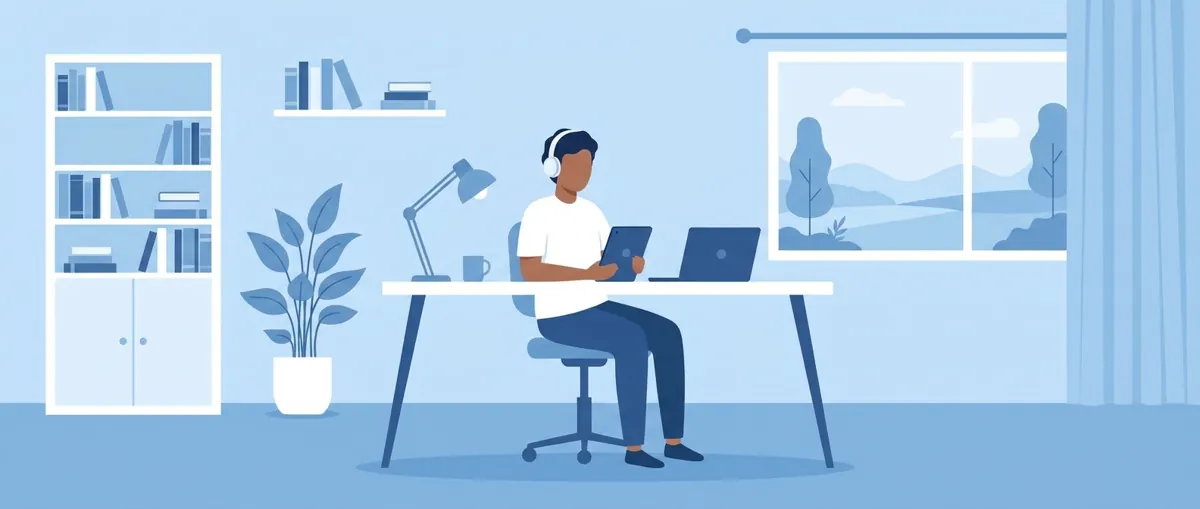
Position your desk near a window if possible. Natural light reduces eye strain, improves mood, and helps regulate your circadian rhythm—all of which enhance focus during online classes. Ensure adequate ventilation so you don't feel drowsy during long study hours. If natural light isn't available, invest in a quality desk lamp.
Essential Furniture and Equipment Setup
Ergonomic Chair and Desk Height
Your chair should support your lower back and allow your feet to rest flat on the floor. The desk height should align with your elbows when your arms are relaxed at your sides. Poor posture during online tuition sessions leads to neck pain, back strain, and reduced concentration. An adjustable chair and desk prevent discomfort that disrupts learning over months of study.
Lighting: The Often-Overlooked Essential
A desk lamp with brightness between 500–750 lux is ideal for reading and screen work. Position it to the side of your monitor to avoid glare. Proper lighting reduces eye fatigue, headaches, and the urge to take frequent breaks, especially important during evening online tuition classes.
Internet Stability and Device Setup
A stable, high-speed internet connection is non-negotiable for online tuition. Position your router near your study desk or use a wired Ethernet connection if possible. Keep your laptop or tablet at eye level using a stand to maintain good posture. Test your camera, microphone, and audio before each class to avoid technical distractions.
How Can I Reduce Digital Distractions During Online Tuition?
Digital distractions are the biggest threat to focus during online learning. Keep your phone in another room or a drawer during study hours—not just on silent. Use app blockers like Freedom, Cold Turkey, or Forest to restrict access to social media, YouTube, and gaming apps during scheduled study time. Close all unnecessary browser tabs and disable notifications on your computer. Communicate your study schedule to family members so they know not to call or message during online tuition sessions.
Organizing Your Study Space for Maximum Efficiency
Minimal but Functional Desk Surface
Keep your desk clear of items unrelated to your current task. A notebook, pen, water bottle, and your device are enough. Store textbooks, reference materials, and supplies in a nearby shelf or cabinet. A cluttered desk creates cognitive overload and divides your attention. Before each online class, spend two minutes clearing your desk to signal a fresh start.
Storage Solutions and Quick Reference
Use a small bookshelf or wall-mounted shelves to organize textbooks by subject. A whiteboard or bulletin board above your desk helps you jot down key points, formulas, or the day's learning goals without creating visual chaos.
What Is the Ideal Location for a Study Space at Home?
The ideal location is a quiet corner or separate room away from kitchens, living rooms, and entertainment areas. Ensure access to natural light, minimal household noise, and low foot traffic. The space should feel separate from leisure areas so your brain associates it with focused work.
Managing Noise and Interruptions
Soundproofing on a Budget
Heavy curtains, carpets, and bookshelves help absorb sound. If household noise is unavoidable, noise-canceling headphones or white noise machines (apps like Noisli or myNoise) can help. Communicate study hours to family members and ask them to keep noise levels low during your online tuition sessions.
Setting Boundaries with Family
Create a simple visual signal—a closed door, a "Do Not Disturb" sign, or a specific colored light—to indicate study time. Explain to younger siblings and parents why uninterrupted focus matters for learning.
What Furniture and Equipment Do I Need for an Effective Study Space?
You need an ergonomic chair, adjustable desk at elbow height, a desk lamp (500–750 lux), stable internet, and a device stand for your laptop or tablet. Add a small shelf for books, a whiteboard for notes, and a water bottle holder. Invest in quality basics rather than decorative items that create clutter.
Creating a Routine Around Your Study Space
Your study space is most effective when paired with consistent routines. Start each session by clearing your desk, silencing your phone, and reviewing your learning goals. Establish a fixed study schedule so your brain anticipates focus during those hours. End each session by tidying up and noting what you'll tackle next. This ritual strengthens the association between your space and productive learning.
Maintaining Your Study Space Over Time
A distraction-free study space requires ongoing maintenance. Weekly, remove accumulated papers, wipe down surfaces, and reorganize materials. Monthly, assess what's working—does the lighting feel adequate? Is the chair still comfortable? Is noise still an issue? Small adjustments based on real experience make your space increasingly effective. Pair your optimized space with proven study techniques to maximize results from your online tuition investment.
Final Thoughts: Your Space Shapes Your Success
A distraction-free online study space is an investment in your academic performance. Whether you're preparing for CBSE board exams or working with online tutors, your environment matters. Start with the essentials—a quiet location, ergonomic furniture, proper lighting, and digital discipline—then refine based on what works for you. Many students find that within a few weeks of using a dedicated, optimized study space, their focus, retention, and grades noticeably improve.
Frequently asked questions
- How Can I Reduce Digital Distractions During Online Tuition?
- Digital distractions are the biggest threat to focus during online learning. Keep your phone in another room or a drawer during study hours—not just on silent.
- What Is the Ideal Location for a Study Space at Home?
- The ideal location is a quiet corner or separate room away from kitchens, living rooms, and entertainment areas. Ensure access to natural light, minimal household noise, and low foot traffic. The space should feel separate from leisure areas so your brain associates it with focused work.
- What Furniture and Equipment Do I Need for an Effective Study Space?
- You need an ergonomic chair, adjustable desk at elbow height, a desk lamp (500–750 lux), stable internet, and a device stand for your laptop or tablet. Add a small shelf for books, a whiteboard for notes, and a water bottle holder.
Related articles
- How to Choose the Right Online Tutor for Your Child
- Find an Online Home Tutor Near Me: Your Complete Guide
- Unlock Online Tutoring Jobs for Students: A Simple Guide
- Unlock Online Home Tuition Jobs: Your Guide to Success
- Online Teaching Jobs for Students: A Lucrative Guide
Explore related tuition services: CBSE tuition · online tuition